When Taps and Power Fail, Voters Punish the ANC
Service delivery and living standards shaped the 2026 local vote
For millions of South African households, the question of who governs locally is anything but abstract. It shows up in whether the taps work, whether the lights stay on, and whether a job is waiting at the end of the school year. That everyday stake, analysts say, explains the African National Congress’s defeat in the 2026 local government elections held earlier this month.
Writing in The Common Sense on November 12, 2026, Bheki Mahlobo argues that the party’s electoral collapse was rooted in a long economic slide that eroded the material gains citizens had once enjoyed. The analysis follows an earlier piece examining weakening business confidence, falling investment, and slowing growth as drivers of the ANC’s loss. This second instalment turns the lens on what those trends meant for ordinary living standards and the services people depend on.
The evidence Mahlobo presents is stark when placed side by side. Economic growth strengthened between 1994 and 2008, then slowed sharply thereafter. ANC support rose to 66.0 percent in the 2006 local government elections but had fallen to 31.0 percent by 2026. The two curves tell a connected story: when growth ran strong, so did the party’s standing with voters; when growth stalled, that standing drained away.
Growth matters because it determines how quickly living standards improve. Real GDP per person rose strongly from 1994 to 2008, then stagnated and declined as the economy weakened. That deterioration in daily material circumstances, Mahlobo argues, was mirrored in the ANC’s shrinking vote share.
The good years also funded the state’s ability to deliver. Robust growth between 1994 and 2008 allowed strong revenue collection, which let government expand welfare and service delivery spending even as public debt levels were halved. Citizens saw the results directly. The share of households without electricity fell sharply between 1995 and 2008 before the pace of improvement slowed, and the ANC’s strongest electoral performances coincided with that period of rapid gains in access to power.
Meanwhile, a similar pattern holds for water and sanitation. The share of households with access to piped water and these services increased substantially between 1994 and 2008, before the pace of improvement slowed again, and access to piped water eventually began to decline. As those improvements weakened, so too did the ANC’s electoral support.
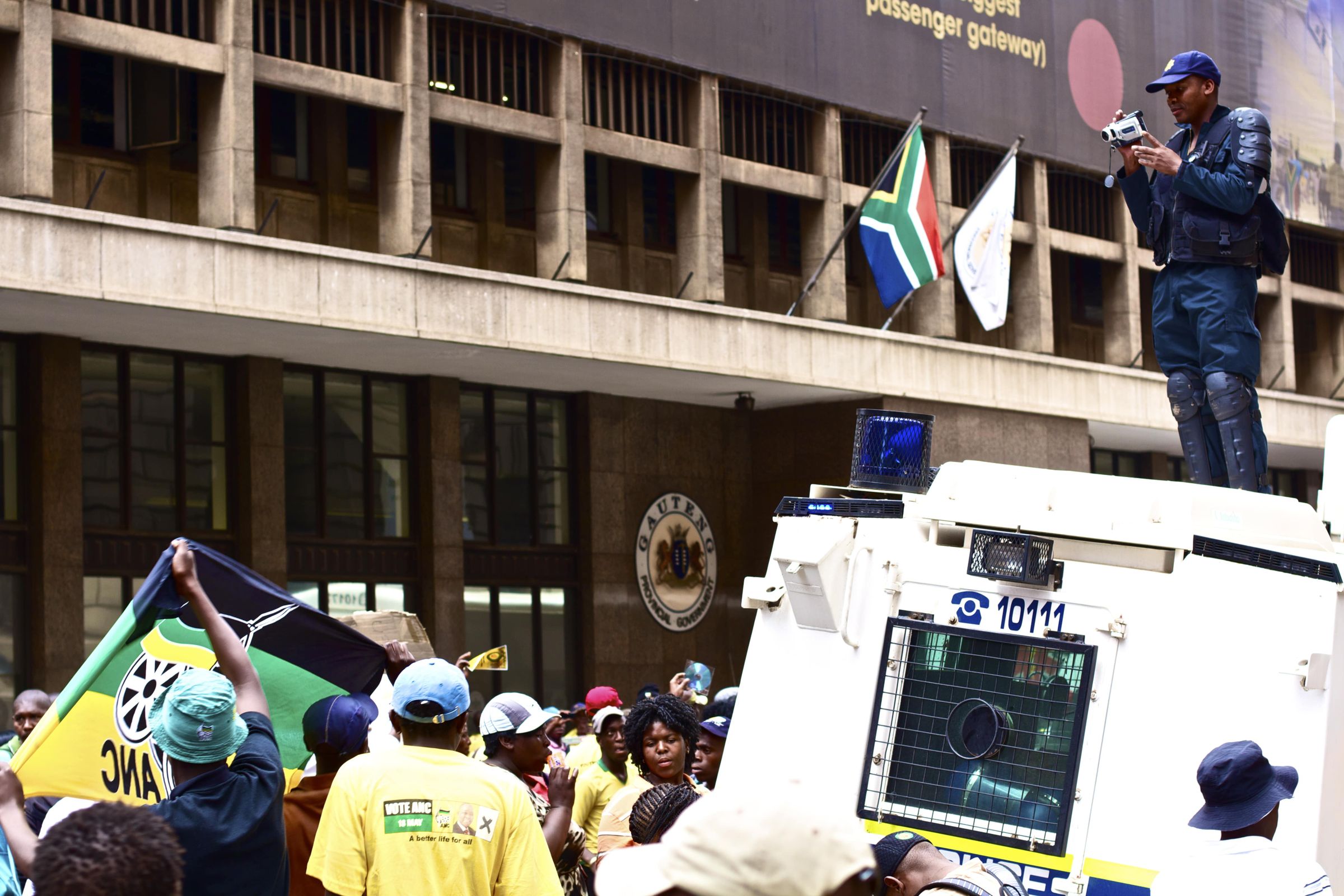
Citizens did not simply wait quietly for conditions to change. As growth slowed, job creation weakened and the funds available for service delivery came under pressure. Public dissatisfaction mounted, and it was visible in the rising share of protests that turned violent. Mahlobo treats these protests as an early warning that the ANC was losing political backing; the final chart shows the share of violent protests increasing as ANC support declined. For residents, that unrest was a signal that patience with failing delivery had run out.
The overall picture is one of cause and consequence. The ANC’s support rose while the economy expanded, living standards improved, and access to basic services increased. It fell when growth weakened and improvements in people’s material circumstances stalled. The party’s defeat in the 2026 local government elections, in this reading, was the end point of a prolonged economic deterioration that sapped its capacity to deliver the gains that had once sustained its political dominance.
What happens next carries real weight for citizens. Mahlobo argues that reversing the decline will require restoring economic growth, accelerating job creation, and improving service delivery. If the ANC manages this, it has an opportunity to recover much of the support it has lost. If it cannot, the party’s electoral decline is likely to continue. For South African voters, the calculation is straightforward: their ballots in 2026 tracked the quality of their daily lives, and whichever party governs them next will be judged by the same measure.
Q&A
What does Bheki Mahlobo identify as the root cause of the ANC's 2026 local election defeat?
He argues the defeat was rooted in a long economic slide that eroded the material gains citizens once enjoyed, weakening the ANC's capacity to deliver services and sustain its political dominance.
How did access to basic services change over time?
The share of households without electricity fell sharply between 1995 and 2008 before improvement slowed, and access to piped water and sanitation increased substantially between 1994 and 2008 before slowing and, for piped water, eventually declining.
What happened to ANC support as the economy weakened?
ANC support in local elections fell from 66.0 percent in 2006 to 31.0 percent in 2026, tracking the slowdown in growth, the stagnation of real GDP per person, and weakening service delivery.
What role did protests play in signaling political change?
As growth slowed and delivery faltered, public dissatisfaction mounted and the share of protests that turned violent rose. Mahlobo treats this unrest as an early warning that the ANC was losing political backing.