Coalition scramble raises cost of running SA councils
Fragmented municipal vote forces coalition bargaining and raises governance costs
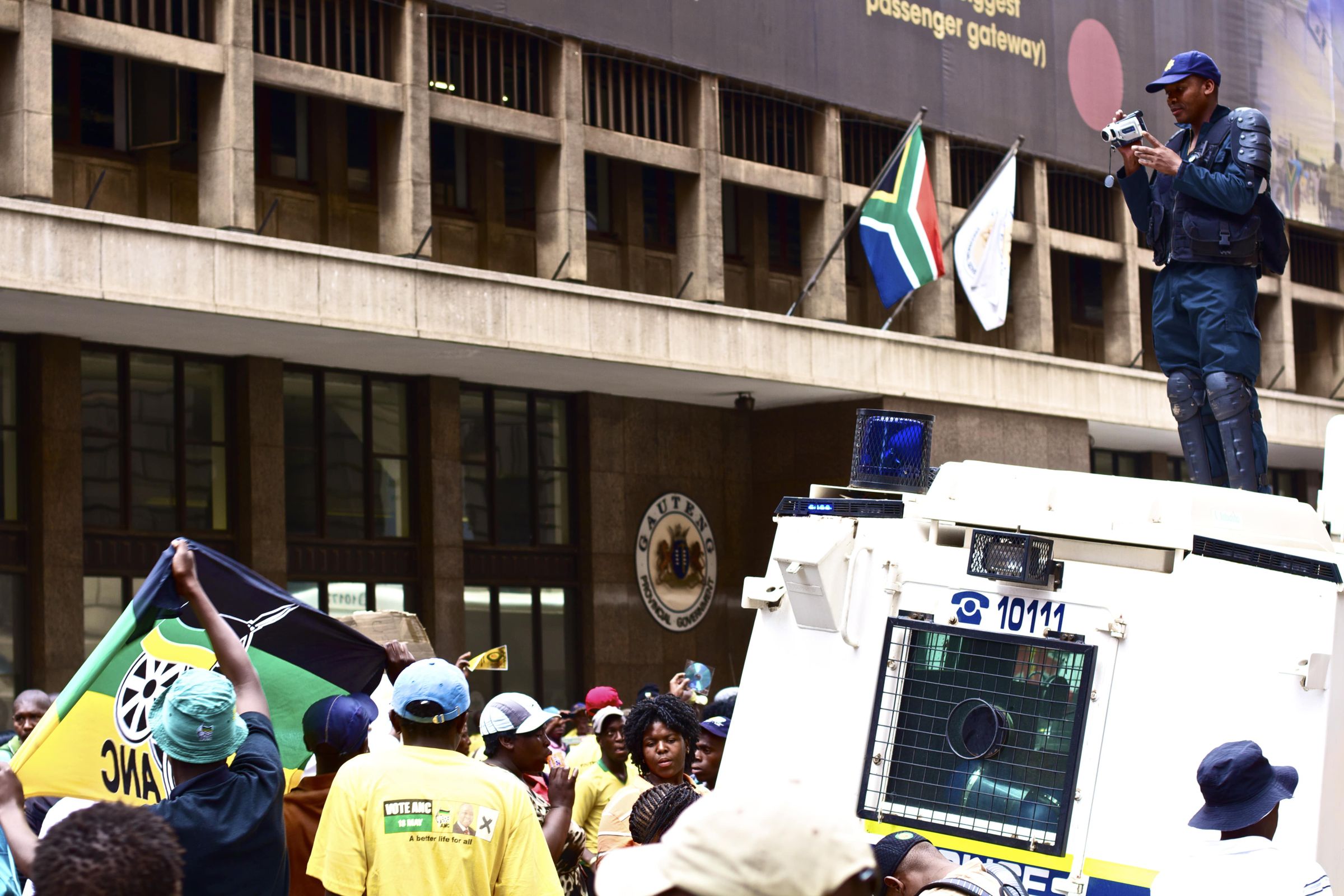
South Africa’s 2026 local elections have redrawn the political marketplace, and the immediate consequence is a sharp rise in the cost of doing political business. With no clear majority in 137 of the country’s 213 local councils, including 7 of its 8 largest cities, coalition bargaining rather than outright control will now determine who runs the municipalities that deliver infrastructure and government services to voters. The horse trading for mayoralties has already begun, as heads of major parties strike deals to secure positions and guarantees for their side. The ANC appears poised to assemble a large coalition in Johannesburg that would block the Democratic Alliance, winner of the largest share of votes there, and its mayoral candidate Helen Zille from taking office.
The electoral arithmetic behind this shift is stark. Turnout on Nov. 4 exceeded expectations, with 52.25% of registered voters showing up, but the vote fractured across an unusually crowded field: more than 600 parties registered to compete and 538 fielded candidates, with the top ten taking home about 90% of the total vote. The African National Congress, the party of President Cyril Ramaphosa and the governing party since the transition to multiracial democracy in 1994, saw its support plummet from 45.59% in 2021 to 30.76% this year. That loss of market share cost the ANC control of 68 municipalities, leaving it at the head of only 54 of the 213 local councils. It follows the 2024 national elections, when the party lost its National Assembly majority for the first time since 1994.
The ANC’s decline has created openings that competitors moved to capture. The Democratic Alliance, a market-oriented, classically liberal party that campaigned on clean governance, anti-corruption measures, infrastructure revitalization and economic growth, gained voters in every province except the Western Cape, where it already controls key municipalities. It led in councils across the country and won the majority of voters in Gauteng province, home to Pretoria and Johannesburg. The party has been the largest opposition force since 1999 and sits in the Government of National Unity, the coalition formed after the 2024 elections produced no clear majority.
The Umkhonto weSizwe Party, which debuted in 2024 with 14.5% of the national vote, marginally underperformed expectations at slightly under 10% nationally. Closely aligned with former president Jacob Zuma and procedurally blocked from joining the Government of National Unity in 2024, the party’s strongest returns came in its KwaZulu-Natal heartland, where it took more than a third of the vote, ahead of the Inkatha Freedom Party in second and the ANC in third. In eThekwini, the province’s largest municipality, negotiations over the Durban mayoralty are already hotly contested. ActionSA, founded in 2020 by former DA leader Herman Mashaba, campaigned under the motto “South Africa First” with an anti-corruption and public safety agenda alongside a strongly anti-immigration stance consistent with Mashaba’s record of xenophobic statements during his time as Johannesburg mayor.
Not every challenger converted attention into results. The Economic Freedom Fighters lost about 40% of its votes from the last local elections, finishing at 5.67%. The Inkatha Freedom Party and the Freedom Front Plus held at levels comparable to 2021. The South African Communist Party exceeded expectations at 2.38% in its first contest since leaving its alliance with the ANC, but the 2024 standout Patriotic Alliance failed to build momentum.
The structural driver of all this volatility is the mixed-member proportional system itself. Voters cast two or three ballots: a ward ballot decided by simple majority that fills half of each council, and a proportional representation ballot that balances seats to match party support, with some districts outside major metros adding a third ballot for district councils. A party taking 30% of votes in a municipality wins no outright seats but still gains proportional representation on the council. The result is a system that sustains hundreds of competitors and, increasingly, forces coalition government at the municipal level, where councils choose mayors who need the support of more than 50% of voting councilors.
Whether these coalitions can hold, and actually govern, is the central risk. Roughly a third of municipalities were already governed by coalitions before the election, and while some have proved remarkably successful, the absence of rules governing coalition-building has left many volatile. Recent analysis by the Mapungubwe Institute shows that large coalitions excluding plurality parties are significantly more likely to fracture and fail. As detailed in coverage at https://goodauthority.org/news/south-africas-2026-local-elections-were-highly-competitive/, the fracturing of the vote means coalitions will now govern almost twice as many local councils as before.
The longer horizon points to 2029, when the next national elections are scheduled and Ramaphosa will be term-limited, forcing the ANC to choose a new candidate. The competitive intensity of this cycle offers few clues about what that contest will hold. Who the long-term winners will be remains an open question.
Q&A
How many local councils lack a clear majority after the 2026 elections?
137 of the 213 local councils, including 7 of the 8 largest cities, have no clear majority, so coalition bargaining will determine who governs.
How much municipal control did the ANC lose?
Its support fell from 45.59% in 2021 to 30.76%, costing it control of 68 municipalities and leaving it leading only 54 of 213 councils.
What happened to the Democratic Alliance?
It gained voters in every province except the Western Cape, led councils across the country, and won the majority of voters in Gauteng, but an ANC-led coalition in Johannesburg appears poised to block its mayoral candidate Helen Zille.
What is the central risk for the new coalitions?
Roughly a third of municipalities were already coalition-governed, and the absence of rules governing coalition-building has left many volatile; Mapungubwe Institute analysis shows large coalitions excluding plurality parties are significantly more likely to fracture and fail.