Election Campaigns Go Up Empty: No Delivery Story to Sell
Service delivery gaps dominate where campaigns once ran on big national ideas
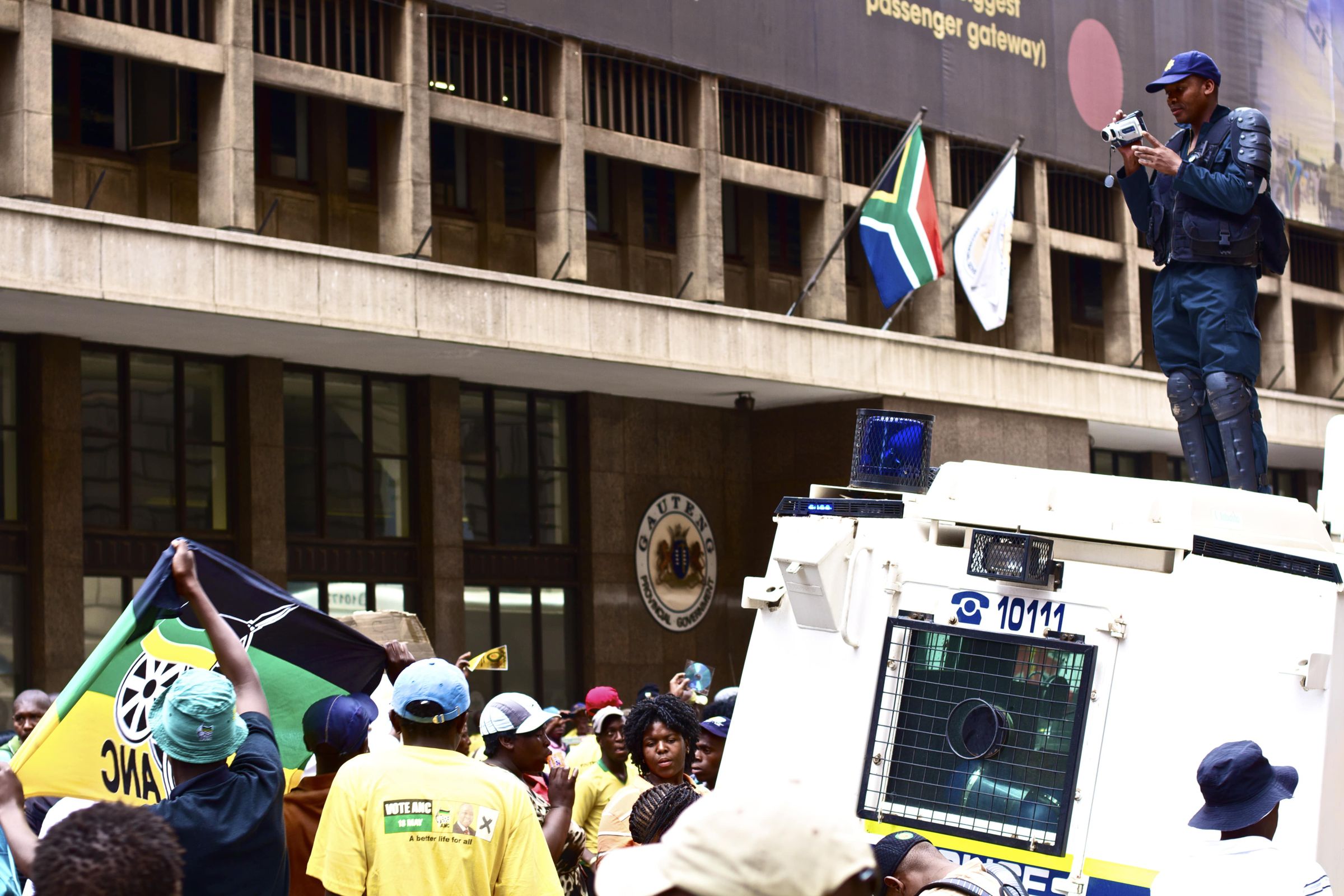
The posters went up weeks ago, and they say almost nothing. Across the country, ahead of the 4 November local government elections, party campaign material boils down to a single instruction: vote for us because we are better than the alternatives. There is no central message, no unifying argument, no issue that ties the campaign together. For a country that once fought elections over corruption, land and the presidency itself, the absence of a dominant narrative is itself the story of this campaign.
The delivery gap is most visible where governing is hardest. In Johannesburg, the ANC holds the mayoral seat and dominates the council, and it is widely blamed for the city’s current state of decline. The DA has pressed that advantage deliberately, building its campaign around service delivery and, to an extent, water supplies, themes that resonate strongly with the communities that support it. Helen Zille has spent much time and energy reaching out to newer voters in the city, and it will only be clear on election day whether that effort has succeeded. Its immediate effect, however, is already measurable: the ANC has been forced onto the back foot over service delivery, and remarkably, it has failed to assemble even a coherent response to those grievances.
Additional reference context is available at https://www.dailymaverick.co.za/article/2026-10-14-sas-lack-of-a-dominant-election-narrative-fractures-the-national-voice-before-polls/.
That operational weakness sits inside a larger organisational problem. The ANC’s campaign has no single punchy message, and the party has been unable to agree on candidates. Its decline means it can no longer dominate national politics or command the hold on society it maintained up until the pandemic, and major internal rifts have compounded the sense of lassitude around this campaign. A party that once set the terms of every national debate is now struggling to run a competent local election effort.
The contrast with previous campaigns is stark. The 2016 local elections were, in effect, a referendum on then president Jacob Zuma, with the Gauteng ANC saying the Nkandla issue cost it votes. Zuma overshadowed that poll to such an extent that the Gauteng ANC tried to stop the national party from using his image on posters advertising the manifesto launch in the province, later offering the weak justification that his appearance at the event was confirmed only after the posters had been printed. By 2021, Zuma was gone, and President Cyril Ramaphosa had led the party to victory in the 2019 national and provincial elections, a poll fought against intense load shedding and growing economic strain, shortly before the onset of the Covid-19 pandemic. At that point, the overriding narrative was that the pandemic had exposed the profound frailties of the state.
This time, no such frame exists. Parties are preaching to their followers and addressing specific communities with generic messages. Part of the reason lies beyond party headquarters: society itself has changed over the last decade. Long-standing political drivers like race, which historically framed almost every national debate, no longer hold the same overwhelming sway over voters. Race will probably remain a factor in politics for as long as there is racialised inequality, but it has not been a major feature of this campaigning. Even the land issue, which is all about race and dominated debate in 2017, 2018 and 2019, has gone unused by the parties in this campaign.
Meanwhile, the space in which politics is mediated has changed too. The SABC, to the country’s detriment, has far less influence than it once did, and live broadcast media faces unprecedented competition from podcasts, where more and more discussion now takes place. Lacking a shared national reference point, political discourse has fractured, prompting leaders and parties to focus on influencing their local communities. That helps explain the rise of actors like AfriForum and March and March, which make no attempt to build a broad constituency. They do not need one. They need access to a single constituency, which they can then leverage for power.
Society has also become more divided over the last decade. As the rift between insiders and outsiders deepens and enclavisation continues, conversations drift further apart. No one party, leader or set of ideas can dominate braais in Khayelitsha, Musina and Parkhurst simultaneously. There were times, whether during the Zuma rape trial in 2006 or the contest over the ANC’s 2017 conference, when the political story of the day was common to conversations across many different parts of society. That shared reference point has largely dissolved.
The trajectory points one way. The ANC is likely to continue its decline, no other party will dominate the national discussion, enclavisation will deepen, and the media landscape will grow more diffuse. Future elections are likely to see the country continuing to talk past itself. The lack of a dominant election narrative is fracturing the national voice before the polls, and the shape of things to come is already visible in the quiet, fragmented campaign now underway.
Q&A
What themes is the DA campaigning on in Johannesburg?
The DA has built its Johannesburg campaign around service delivery and, to an extent, water supplies, themes that resonate strongly with its supporting communities. Helen Zille has also spent much time reaching out to newer voters in the city.
How has the ANC responded to service delivery grievances in Johannesburg?
The ANC, which holds the mayoral seat and dominates the council, has been forced onto the back foot over service delivery and has failed to assemble even a coherent response to those grievances.
Why does this campaign lack a dominant national narrative?
Society has changed over the last decade: race no longer holds overwhelming sway, the land issue has gone unused, the SABC has far less influence, podcasts compete with broadcast media, and growing enclavisation means no single party or set of ideas dominates conversations across different communities.
How do past elections compare with the current campaign?
The 2016 local elections were effectively a referendum on Jacob Zuma, with the Gauteng ANC blaming the Nkandla issue for lost votes. In 2019, Cyril Ramaphosa led the party to victory amid intense load shedding, shortly before the Covid-19 pandemic exposed the frailties of the state. This campaign has no comparable frame.