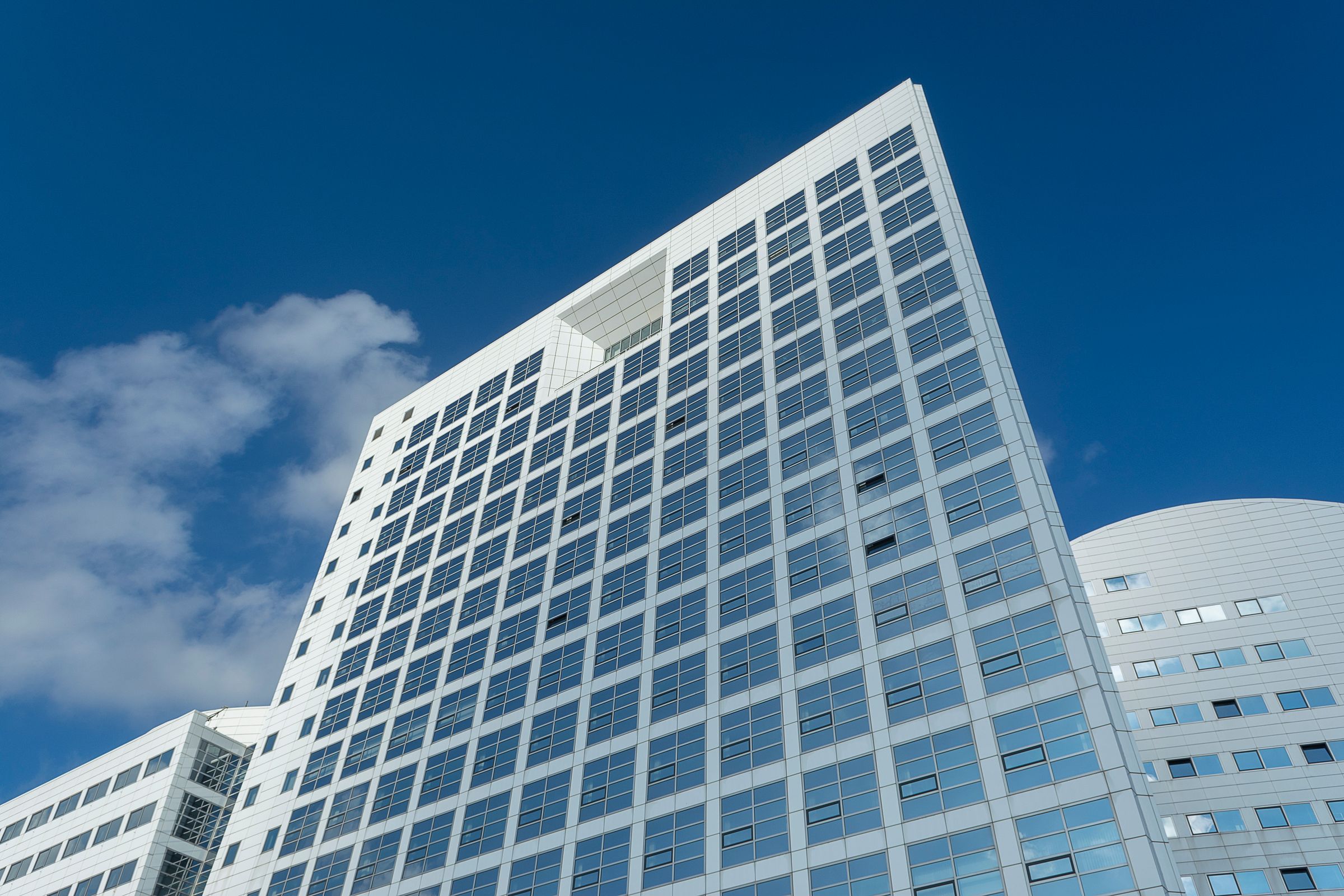
South Africa’s government has put itself squarely on record in defence of the International Criminal Court, warning that American sanctions against the institution and political pressure on its officials strike at the foundations of international justice. Speaking at the Social Justice Summit at Stellenbosch University on Monday, Deputy Justice Minister Andries Nel said the country remained deeply concerned by the measures imposed by the United States on the court and its officials, and reaffirmed South Africa’s position as a founding member of the ICC.
Nel drew a careful distinction between legitimate criticism of a court’s decisions and pressure directed at the people who serve it. “It is entirely legitimate to criticise a court or disagree with its decisions,” he said. “That is different from applying pressure to judges or prosecutors because of the work they perform.” His remarks came at a moment, he noted, when the institutions of international justice are under strain.
The sanctions were announced by US Secretary of State Marco Rubio on Friday, hours after the Norwegian Nobel Committee awarded the 2026 Nobel Peace Prize to South African jurist Navi Pillay for her contribution to international law and human rights. The measures mark a significant escalation in Washington’s campaign against the court. Where the Trump administration had previously sanctioned individual judges, prosecutors and associated organisations, the latest action targets the institution itself, potentially restricting its access to banking, technology and other essential services. Rubio accused the ICC of improperly asserting jurisdiction over American and Israeli nationals. Neither the US nor Israel is a party to the Rome Statute, the treaty establishing the court, which maintains that its jurisdiction can extend to crimes committed on the territory of states that have accepted its authority, regardless of the nationality of the accused.
The court itself condemned the sanctions as an attack on justice and the rule of law, calling on its 125 member states to ensure it can continue operating independently. Its Trust Fund for Victims warned that restrictions on financial services and partnerships could disrupt programmes providing rehabilitation, reparations and other assistance to survivors of serious international crimes. UN Secretary-General António Guterres called the decision a serious blow to the collective pursuit of international criminal justice, warning that it could undermine the ICC’s mandate, including investigations referred by the UN Security Council and member states. UN High Commissioner for Human Rights Volker Türk urged member states to act urgently to protect the court.
The sanctions do not amount to an immediate shutdown. The US Treasury issued four general licences on 9 October permitting specified activities to continue, including certain transactions needed to maintain or wind down ICC operations, telecommunications and software services, pension payments and transactions relating to detainees in ICC custody. A licence covering specified operational transactions runs until 7 April 2027. These exemptions offer temporary relief but leave the wider restrictions, and questions about the court’s longer-term functioning, unresolved.
Attention has now shifted to how member states and allied institutions will respond. European governments are weighing whether diplomatic opposition should be backed by legal measures. Belgium has proposed activating the European Union’s Blocking Statute, a mechanism designed to protect European businesses and institutions from certain extraterritorial sanctions. French Foreign Minister Jean-Noël Barrot said on Monday, before a meeting of EU foreign ministers in Luxembourg, that Europe wanted dialogue with Washington to secure the withdrawal of the measures, adding that if that failed, France stood ready to activate the Blocking Statute. The EU said it was prepared to take necessary measures to protect the court while pursuing diplomacy, though no activation decision had been confirmed at the time of writing. The Netherlands, which hosts the ICC in The Hague, has also reaffirmed its commitment to protecting the court.
Litigation is also under way in the United States. Four organisations, including Human Rights Watch and the Centre for Constitutional Rights, filed a lawsuit in August, before the institution-wide sanctions were announced, arguing that the measures violate constitutional protections and interfere with their ability to support international justice.
The political confrontation surrounding the prize has been sharp. President Donald Trump questioned Pillay’s international standing, dismissed her as someone nobody had heard of, and insisted the award should have gone to him for his claimed role in ending eight wars. Israel’s Foreign Ministry accused Pillay of promoting false allegations against Israel and invoked Nazi propagandist Joseph Goebbels in its criticism, while Prime Minister Benjamin Netanyahu separately criticised her. Pillay chaired the UN Independent International Commission of Inquiry on the Occupied Palestinian Territory, including East Jerusalem, and Israel, which concluded that Israel had committed genocide in Gaza, a finding Israel rejects. The ICC has issued arrest warrants for Netanyahu and former Israeli defence minister Yoav Gallant over alleged war crimes and crimes against humanity arising from the war in Gaza; Israel rejects the court’s jurisdiction and the allegations.
Pillay, speaking on Saturday, described the sanctions as unacceptable and voiced concern about their consequences for the independence of international courts. Her standing rests on decades of work: representing anti-apartheid activists, presiding over the International Criminal Tribunal for Rwanda, serving as an ICC judge and as UN High Commissioner for Human Rights, and contributing to the landmark Akayesu judgment, which helped establish that rape and sexual violence could constitute acts of genocide. She currently serves as an ad hoc judge at the International Court of Justice in proceedings concerning allegations of genocide against Myanmar.
At home, Justice Minister Mmamoloko Kubayi congratulated Pillay on Friday, calling the award a proud moment for the country and Africa and saying it reaffirmed the importance of respecting international law. South Africa is separately pursuing a case against Israel at the ICJ, alleging violations of the Genocide Convention in Gaza; the ICJ determines state responsibility while the ICC investigates individual criminal responsibility.
For now, the central accountability question remains open. Nel reaffirmed South Africa’s support for the court but did not announce specific measures Pretoria would take to shield it from the sanctions. For the ICC’s member states, the test is whether expressions of support will be followed by practical steps to keep the institution functioning.