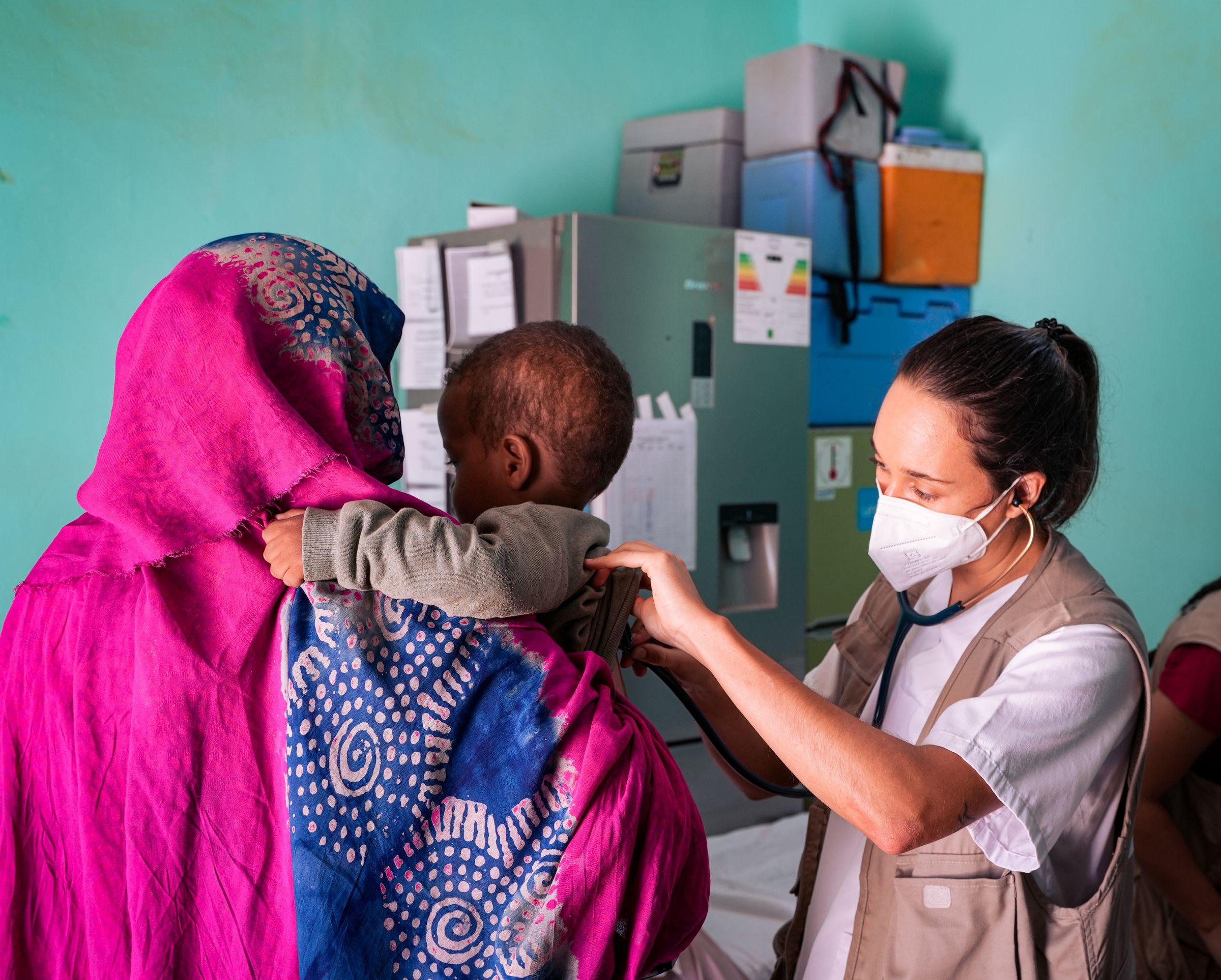
For the community health worker who is often the first person a family sees when illness strikes, the stakes of a shrinking aid budget are not abstract. Amref Health Africa warned this week that declining international funding threatens the sustainability of essential services across the continent, from HIV treatment and immunization to maternal and newborn care and nutrition programmes. It is urging African governments to step in with domestic resources before the gaps widen.
The organization pointed to a 23.1 per cent decline in official development assistance in 2025, a drop it said exposes weaknesses in health systems that have come to rely on short-term external support. For the communities those systems serve, the consequences are immediate. Treatment gets interrupted. Vaccinations are delayed. Access to care shrinks at the moments families need it most.
Amref’s message, delivered as global health leaders gather in Berlin for the World Health Summit, is that Africa does not lack priorities. “Africa does not have health priorities and what is missing is financed delivery,” said Group Chief Executive Officer Githinji Gitahi. What is needed, the organization argued, is investment in health workers, community-based services and locally led systems, so that countries are less vulnerable to unpredictable external funding.
The case for community-level investment runs through much of Amref’s argument. Effective health security, the organization said, begins where outbreaks are first detected, in communities where access to reliable information, routine immunization and essential services can determine the scale of an emergency. Community health workers, who often serve as the first point of contact between families and the formal healthcare system, need adequate financing and fair pay if that first line of defence is to hold.
Gitahi said health systems must be rooted in primary healthcare and aligned with African priorities to protect communities against disease outbreaks, climate shocks and financial uncertainty. That matters for people living through floods, droughts and extreme heat, conditions under which Amref called for increased investment in facilities and workers so that services remain operational. African countries, the organization noted, are contending with the combined effects of climate change, conflict, displacement and changing disease patterns.
Amref framed health spending not as a line item to be trimmed but as an investment in economic resilience and human development. It called for increased domestic allocations to prevention, primary care, financial protection and the health workforce, alongside stronger public financial management so that available resources actually translate into services people can use. Governments, it argued, need greater domestic fiscal capacity and stronger public institutions.
At the same time, Amref cautioned against an approach that leaves countries to manage growing health needs alone. International partners, it said, should provide predictable funding aligned with national priorities rather than establish parallel systems, and global institutions and donors should direct resources towards the countries and communities facing the greatest health and fiscal pressures. It also called for dedicated and flexible funding to safeguard essential services in fragile, conflict-affected and climate-vulnerable settings, along with greater investment in surveillance, emergency preparedness, vaccines, medicines and diagnostics.
Beyond financing, the organization’s agenda includes expanding African pharmaceutical and medical production, strengthening regulatory capacity, improving data governance and connecting climate finance to practical health-system needs. Such investments, Amref said, would help countries reduce exposure to external supply disruptions and strengthen their ability to respond to future emergencies.
Meanwhile, in Berlin, Amref is using its participation to build partnerships with governments, funders and implementation partners ahead of the Africa Health Agenda International Conference 2027. That gathering, co-hosted by Amref, Rwanda’s Ministry of Health, Africa Centres for Disease Control and Prevention and the World Health Organization Regional Office for Africa, is scheduled for Kigali from February 28 to March 3, 2027, under the banner “Connected for Change” and the theme “From Dialogue to Delivery: Redesigning Africa’s Ecosystem for a Healthy, Sovereign Future.” It is expected to extend discussions on African-led health reform, resilient systems and sustainable financing.
Amref’s summit engagement includes three co-hosted sessions, seven speaking engagements and six bilateral meetings, covering health-system performance, cross-regional cooperation and translating national policies into local action, including a discussion of Ethiopia’s pathway towards Sustainable Development Goal 3 through primary healthcare reform.
For Gitahi, the bottom line is that Africa’s leadership in health reform must be matched by adequate resources, accountability and partnerships that strengthen, rather than substitute for, African institutions. The alternative, the organization’s warning makes clear, is borne first by the households and communities that depend on those services every day. Whether governments and donors act before those gaps widen may decide how many families keep that first point of contact when illness strikes.