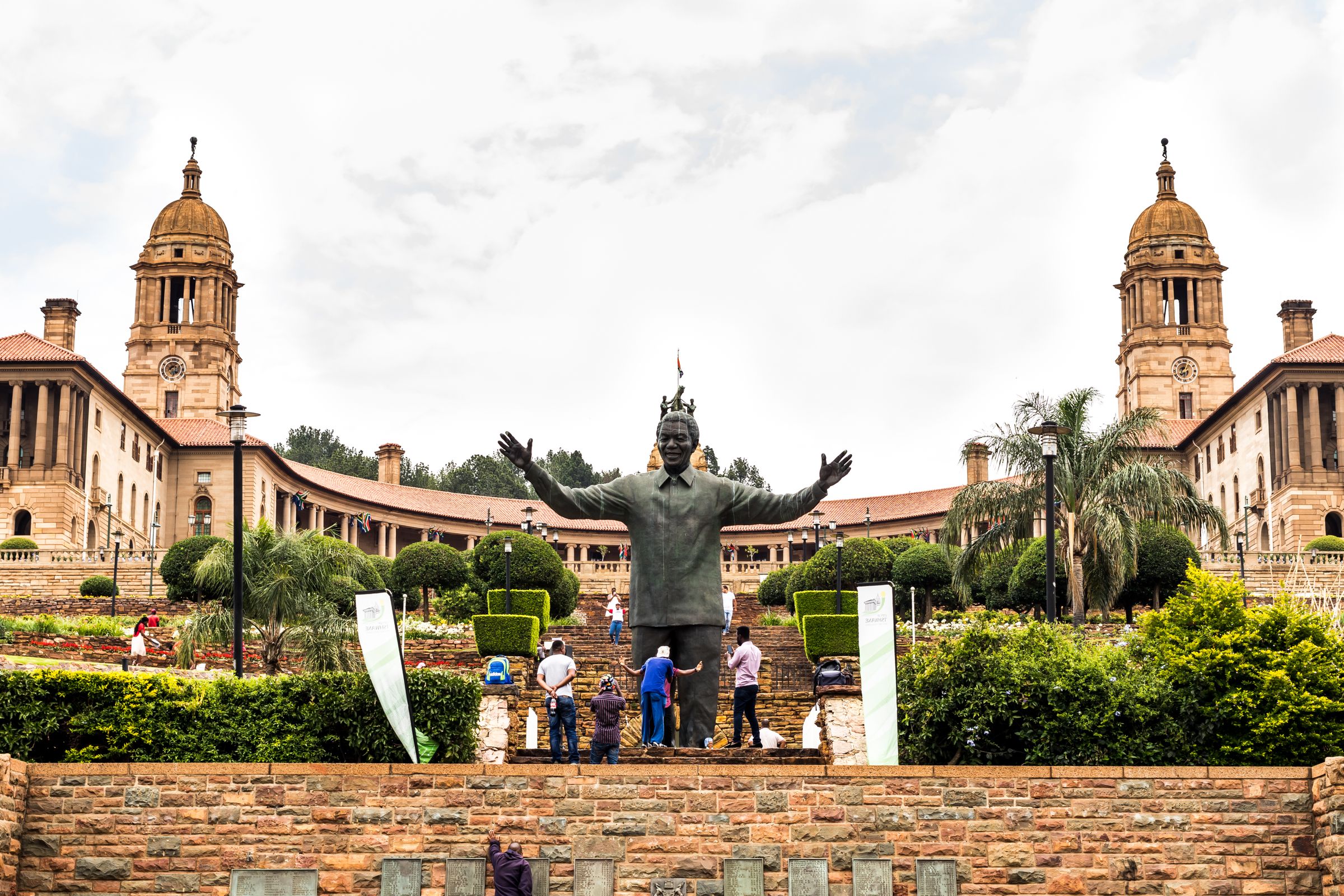
UCT, Nanjing Sign Governance MoU After Two-Day Talks
UCT governance school signs research and teaching pact with Nanjing University
A Memorandum of Understanding between the Nelson Mandela School of Public Governance and Nanjing University was the most concrete outcome of a two-day conference that closed at the University of Cape Town with a pointed question about delivery: what would it take to turn conversations held in the venue into collaborative action that strengthens research, education and practice on the continent?
The school convened the event, titled “Envisioning Africa’s Futures: Governance, leadership and South-South partnerships”, from 30 September to 1 October 2026. It brought together continental academics, policymakers, researchers, practitioners and students for critical conversations about Africa’s future. Its stated objectives ranged from deepening reflection on the nature of the African state to strengthening South-South relations in pursuit of shared goals, and participants were challenged to rethink established assumptions and contribute to a collaborative agenda for research, education and practice.
The new agreement formalises collaboration in research, teaching and academic exchange between the Cape Town school and Nanjing University, reflecting a shared commitment to advancing knowledge production and strengthening South-South engagement. It seeks to support collaborative approaches to pressing development challenges while fostering deeper academic cooperation between Africa and China.
Implementation questions ran through the panels themselves. The second day shifted attention to regional integration and South-South partnerships for development, examining their implications for state-building, green industrialisation and critical minerals. The first of these panels argued that regional integration should be viewed not only as a trade-liberalisation project but also as a developmental strategy, one that needs to extend significantly beyond conventional trade agreements. Speakers said it is imperative for Africa to understand how regional integration, industrialisation and development are being affected by changes in the wider global economy, including disruption to the global climate agenda, and that the continent needs an industrial strategy capable of responding to a range of developmental and structural challenges.
The critical minerals panel confronted the delivery question most directly. Panellists explored policy debates, on-the-ground realities and the implications for state-building and international partnerships, arguing that Africa’s critical-mineral endowment is a potential source of leverage rather than a guarantee of development; it will not solve the continent’s problems. The decisive issue, they argued, is whether African states and regional institutions can build the capabilities, coordination, finance, infrastructure, skills, accountability and local enterprise needed to convert minerals into sustained industrial development, and whether states can avoid the continued reproduction of extractive development models.
The first day had set the analytical groundwork for these delivery-focused discussions. The opening panel, “African State: Current nature and what are we trying to build?”, explored the kind of state required to meet contemporary challenges and respond to citizens’ aspirations, asking what a “fit-for-purpose” African state would look like and for whom it should work. Panellists considered governance models, state capability, democratic accountability and developmental pathways, and reached consensus that such a state should combine democratic legitimacy, developmental capability, social accountability and measurable impact. The central challenge, they concluded, is transforming inherited extractive and weakly accountable institutions into systems that can secure citizens, build productive capacity, include marginalised groups, learn and implement effectively, and operate through stronger national and regional social contracts.
A second panel, “Leadership and governance: What should we put in place?”, examined the systems, institutions and reforms needed to strengthen governance across the continent, framing leadership not simply as individual action but as a relational practice embedded within institutions and accountable governance systems. Speakers underscored the need for stronger accountable stewardship, for rebuilding organised political and associational life in an age of fragmentation and digitalisation, and for interrogating the widening gap between volatile societies and their institutions at both national and global levels.
A third panel took on the persistent gap between academic research and practical implementation. Titled “Disrupting the knowledge-action disconnect: Shaping activist research and education”, it examined how research, education and civic engagement can contribute more effectively to social and policy change, and how stronger connections between universities, policymakers, civil society and communities can improve development outcomes. The central message was that the knowledge-action disconnect is not simply a failure to communicate research or train more leaders; it is produced by power, incentives, institutional design, accountability relationships and the conditions in which leaders are expected to act.
The conference opened with remarks from Professor Suki Goodman, dean of the Faculty of Commerce, who emphasised the importance of universities as spaces for critical inquiry and future-oriented thinking. “Universities are not simply places where knowledge is produced and stored. At their best, they are places where we interrogate the world we have inherited, imagine the world we want and create the intellectual and human capacity to move between the two,” she said. The keynote address followed, delivered by Professor Carlos Lopes under the title “Africa’s next chapter: Leadership, agency and the politics of transformation”. He framed his presentation around three questions: where Africa stands in a changing geopolitical order, where value will be created and captured in the future global economy, and how leaders earn the authority needed to make difficult choices. Reflecting on the opportunities and constraints facing the continent, he highlighted the importance of agency, arguing that leadership must extend beyond responding to external forces to actively shaping rules, building capabilities and creating value.
A plenary session on “Belonging, insecurity and the future of Africa’s prosperity” invited delegates to reflect on the social foundations necessary for sustainable development, exploring the intersections between identity, social cohesion, governance and security, and the importance of inclusive societies where citizens feel connected to public institutions and national development projects.
In closing, Professor Cheryl Hendricks, director of the Nelson Mandela School of Public Governance, called for a renewed agenda that strengthens research, education and practice while broadening participation in agenda-setting processes. That includes rebuilding social cohesion, strengthening civic and policy implementation spaces, and ensuring that Africa enters global and South-South partnerships with a clearer sense of its own priorities and aspirations. She posed specific questions for the plenary: what would a progressive development research programme consist of, how should schools of governance, research institutes, government and intergovernmental departments be organised to achieve greater impact, and which course offerings become important given these conversations. Further details of the conference are available at https://www.news.uct.ac.za/article/-2026-10-09-conference-explores-governance-leadership-and-south-south-partnerships.
Q&A
What was the most concrete outcome of the conference?
A Memorandum of Understanding between the Nelson Mandela School of Public Governance and Nanjing University, formalising collaboration in research, teaching and academic exchange.
When and where was the conference held?
It ran from 30 September to 1 October 2026 at the University of Cape Town, convened by the Nelson Mandela School of Public Governance.
What did the critical minerals panel conclude about Africa's mineral endowment?
Panellists argued the endowment is potential leverage rather than a guarantee of development; the decisive issue is whether African states and regional institutions can build the capabilities, coordination, finance, infrastructure, skills, accountability and local enterprise to convert minerals into sustained industrial development.
What did the knowledge-action disconnect panel identify as the root cause?
The disconnect is produced by power, incentives, institutional design, accountability relationships and the conditions in which leaders are expected to act, not simply a failure to communicate research or train more leaders.