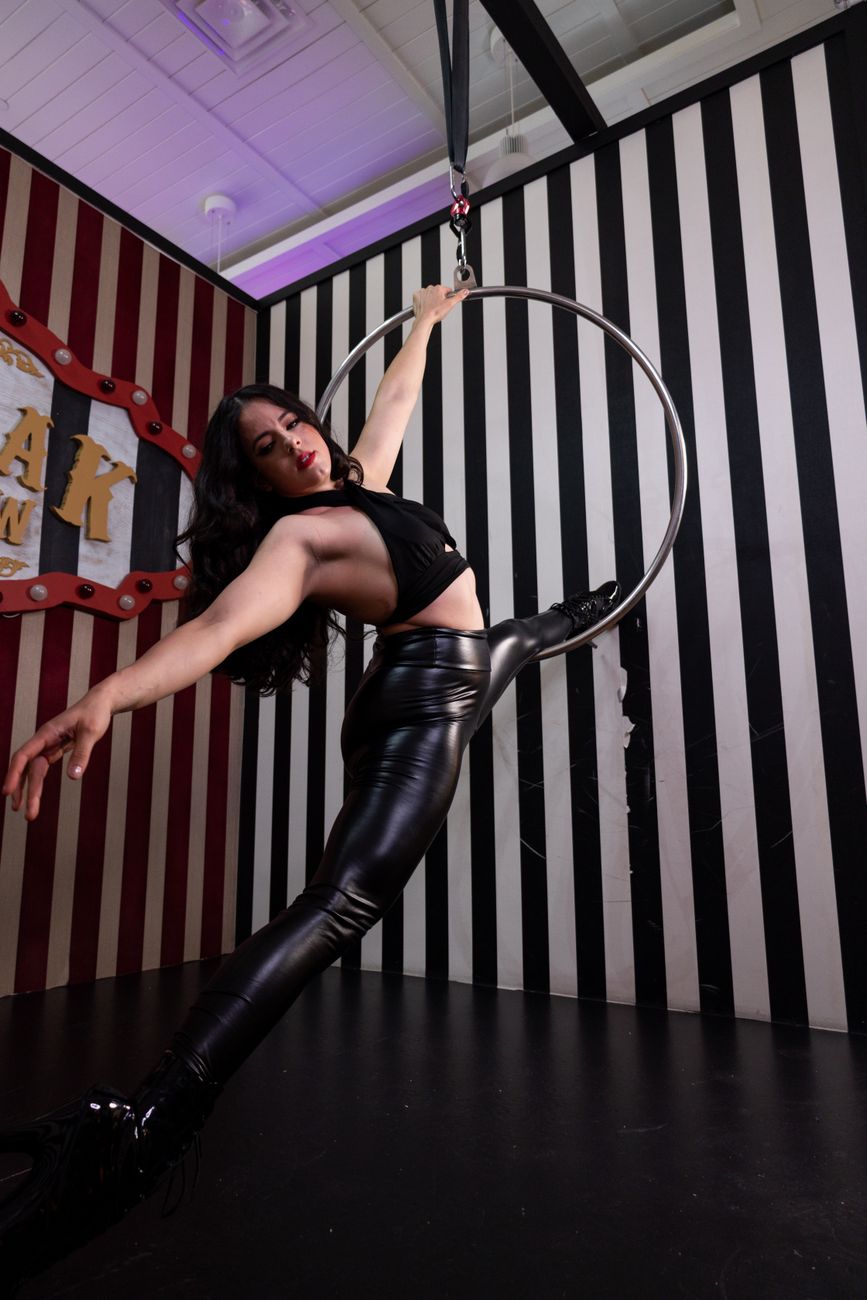
JOHANNESBURG - Brian Ngobese grips the aerial silk with practiced hands, his body suspended two meters above the stage as the crowd below falls silent. Moments later, he swings free, catching the fabric with a single arm as gasps transform into applause. For the 29-year-old performer from Alexandra township, those seconds of flight represent something far larger than entertainment. They represent a path out.
Ngobese grew up in one of Johannesburg’s most densely populated and impoverished townships, a place where opportunity has historically been scarce. Alexandra sits just kilometers from Sandton, the financial district known as Africa’s richest square mile, yet the contrast between the two worlds could hardly be starker. For young people in Alexandra and similar under-resourced communities across South Africa, the gap between talent and paid work has long been difficult to bridge.
The statistics underscore the challenge. Unemployment among South Africans aged 18 to 34 reached approximately 45 percent in 2025, according to Statistics South Africa. Many young people in this age group remain jobless rather than accept informal work, a pattern documented by the Organization for Economic Co-operation and Development. Missing access to formal training opportunities often leaves them stranded on the margins of the labor market for years.
Circus performance has become an unexpected route forward for Ngobese and others like him. The Cirk, a professional circus company based in Johannesburg, works alongside Jozi Circus School’s youth development program to identify and train young performers from under-resourced areas. The model sustains itself through performances, training services, and paid circus work rather than depending entirely on external funding.
Ngobese’s entry into circus came almost by chance. His older brother had introduced him to street and social dancing in childhood, and he later pursued contemporary and hip-hop styles. In 2019, he auditioned as a dancer for a Joburg Theatre production. What was meant to be a short engagement became transformative when The Cirk invited him to remain and train. With support for instruction and transportation through Jozi Circus School, he began developing the strength, flexibility and discipline required for professional aerial work.
“Cirk was like an adventure,” he recalled. “When I saw people flying, I was like, ‘Is this what they’re doing here?’ Okay, this is life. I’m like, ‘Let’s go for it.’”
The training path is demanding. Performers spend years building the physical and mental capacity needed to work professionally. Some transition into teaching roles, while others secure paid positions with production companies or directly with The Cirk. Ngobese now performs regularly, his work supporting both his livelihood and his connection to a community of artists.
Zenzele Letsoela, 38, arrived at circus through a different route. Also from Alexandra, Letsoela trained in ballet and pantsula, the fast-paced township dance style rooted in South African culture. When he moved into aerial acrobatics, he discovered an unexpected obstacle: he is terrified of heights. Rather than abandon the work, he developed strategies to manage the fear while maintaining his performance.
“I wouldn’t say I’ve learned to overcome my fear of heights, but I’ve learned to work around it,” Letsoela said. Hoisted above the stage as a magical tree in the current production, he remains in character despite internal nervousness. “People don’t see that I’m actually nervous going into the air. I look very comfortable. And I’m like, if only you guys knew, I am dying inside.”
Meanwhile, the partnership between Ngobese and Letsoela deepened their professional trajectory. Together, they combined dance with circus skills and began drawing attention beyond the school. “People were like, ‘Where are those guys? We want those guys. We want to see more,’” Ngobese said.
The circus itself is animal-free, blending choreography with gravity-defying acrobatics performed on silks and hoops. The current show follows a “little star” journeying through oceans, fantastical lands and fiery fortresses in search of what will make him shine. Ngobese inhabits that role, his own trajectory mirroring the character’s arc from uncertainty to discovery.
When the performance reaches its climax, Ngobese hangs from an aerial silk by one arm, glittering in gold, having finally found where he belongs. The crowd’s response echoes what he set out to demonstrate: that talent and determination can create pathways even from the most constrained circumstances.
“We just want to show people that we can make it out of the township,” Ngobese said. “What you want to accomplish, you can actually make it.”
Whether other young people from Alexandra and communities like it will find similar openings depends, in part, on whether programs like this one can keep the lights on and the silks in the air.